Udder diseases weaken dairy cows, lead to milk losses and financial losses for the farm. It is therefore important to take targeted preventative measures and act immediately in the event of illness. Desintec products have proven their worth in dairy farming, for udder-healthy animals and a well-functioning farm.This and all other important terms can be found in the glossary

Problem of increased cell counts

High levels of somatic cells in milk cause considerable problems for dairy farms. In North Rhine-Westphalia, for example, the average cell count for milk delivered in recent years has been between 220,000 and 240,000 cells. In most federal states, only around 15 per cent of all farms are below the target value of 100,000 cells.

Financial losses

Increased cell counts of 225,000 cells result in milk losses of one kilogramme per cow per day. Every year, milk losses due to udder diseases, reduced quality, high culling rates and increased veterinary costs lead to financial losses for farmers. Higher labour costs due to longer milking times must also be taken into account. Udder diseases are still one of the main reasons for cows leaving the herd prematurely.

Overview of cell content

The cell content of the total milk provides an essential overview of the udder health of individual cows. The cell content of udderly healthy animals is known to fluctuate around 100,000 cells per millilitre of milk. The cell content is checked as standard at every milk yield check. For this reason alone, no farmer should do without the monthly milk yield check.

Causes of pathogens

Mastitis pathogens can enter the udder and trigger an inflammation, especially if unfavourable environmental influences such as poor milking hygiene, faulty milking equipment, inadequate feeding or poor husbandry play a role. A distinction is made between cow-associated path ogens(S. aureus, S. dysgalactiae, S. galactiae) and environmentally associated pathogens(E. coli, S. uberis).
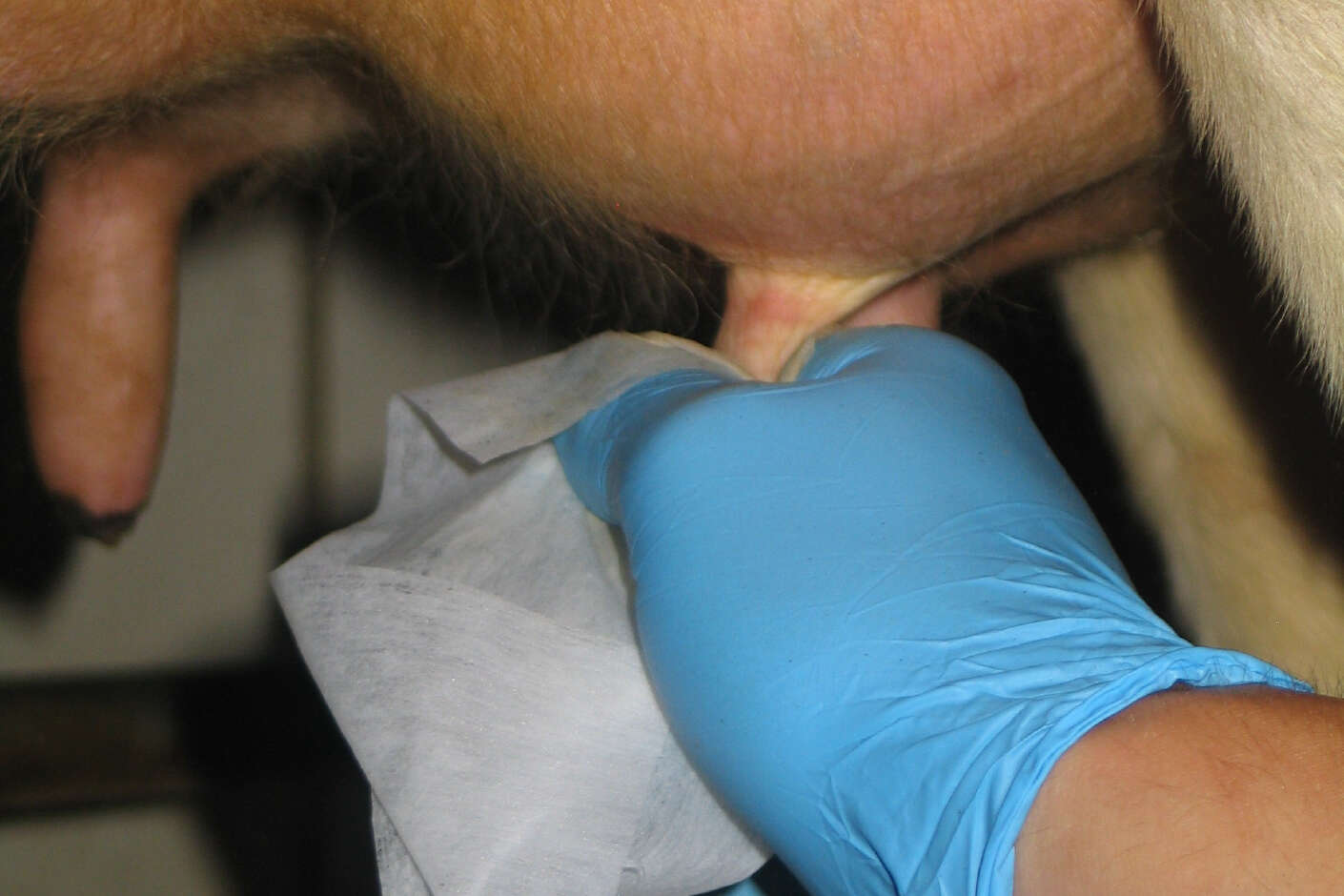
Tips for udder hygiene

A major source of infection for the transmission of cow-associated pathogens is the infected udder quarter. These mastitis pathogens can spread quickly from cow to cow via hands, udder cloths and milking clusters. Interruption of the transmission routes can only be achieved through intensive milking hygiene.

The necessary hygiene measures include wearing milking gloves, correct pre-milking, the use of pre-dipping agents (for example

MH Double PreWash

In the case of environmentally associated pathogens , it is important to strengthen the udder's defence mechanisms and eliminate the sources of infection. Environmental factors such as housing conditions, feeding and milking hygiene must be optimised.

Bacteria multiply more easily in a warm and humid environment. An inadequate, warm and humid stable climate and unhygienic cubicle management increase the germ pressure and overtax the udder's natural defence system. Experience has shown that environmental pathogens can be better controlled if highly alkaline bedding powders such as

Desintec FloorCal pH 12

Compared to conventional limes, the high pH value of >12 and the very rapid drying out of the litter are particularly characteristic. Scientific studies show that infectious environmental pathogens can no longer multiply and develop undisturbed in the litter with a long-lasting high pH value above 9.

Further advantages are its good skin compatibility and easy handling. In cubicles, hygienic lime can either be used in combination with other bedding materials such as straw or sawdust or sprinkled on its own. Additional benefits of lime-straw mixtures include improved comfort and clean udders.

The risk of pathogens entering the udder is greatest after milking, as the teat canal is open for around 30 to 60 minutes. During this time, pathogens can enter the udder unhindered due to high pathogen pressure and cause an infection there. To prevent the transmission of udder pathogens, the use of the two-component dipping agent

Desintec MH Double Sprintactive ingredient chlorine dioxide S. aureusS. agalactiaeS. dysgalaactiaeS. uberis E. coli

The two components are mixed in a 1:1 ratio in the dip cup. Thanks to its oxidising power, the active ingredient chlorine dioxide guarantees very rapid effectiveness. Desintec MH Double Sprint has been proven to be effective against a wide range of germs, including E. coli and S. aureus. Skin-caring ingredients from the human sector also ensure high tolerance on the teats. The two-component product is registered as a biocidal product and can be dipped and sprayed. It fulfils all the criteria of the QM test.

Another measure for problem farms with cow-associated pathogens is the intermediate disinfection of milking clusters. This is becoming increasingly important because the number of cows milked per cluster is increasing as farm units grow. Accordingly, the risk of germ transmission from cow to cow via the milking cluster is significantly increased. Rinsing the milking clusters with water alone does not sufficiently reduce germs, as studies have shown.

In recent years, the active ingredient peracetic acid has become established as the optimal intermediate disinfectant. Peracetic acid is characterised by a rapid and broad effect, especially against cow-associated pathogens. As peracetic acid breaks down into water, acetic acid and oxygen during application, it is also highly biodegradable. A high level of effectiveness in the intermediate disinfection of milking clusters is ensured with the peracetic acid-based

product Desintec MelkDes 15

Note

Use biocidal products with care. Always read the label and product information before use.

Your contact person